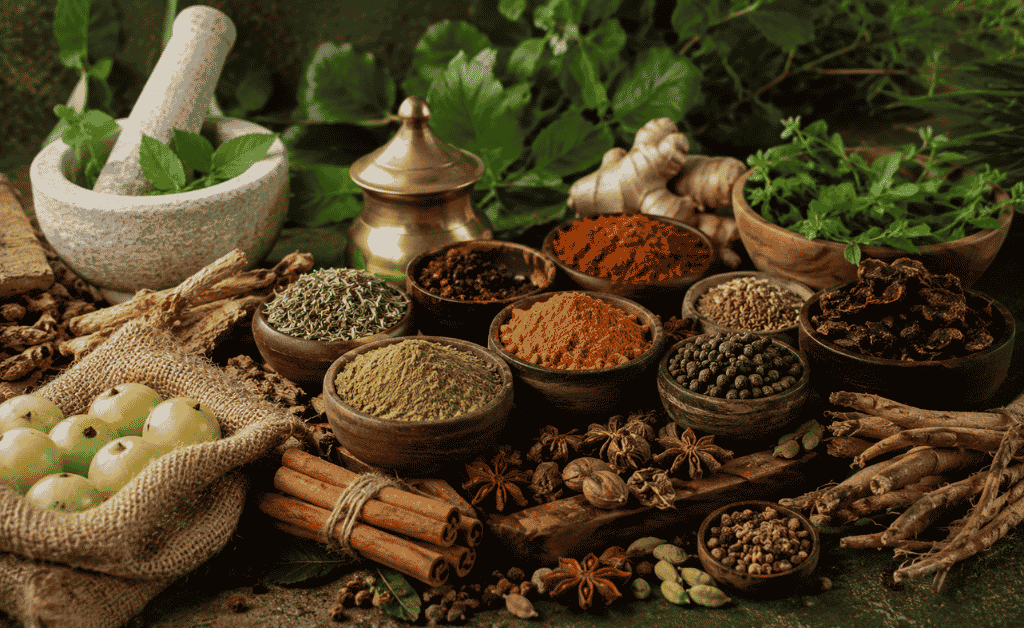
Walk into any Indian kitchen and you will find small jars of turmeric, cumin, coriander, and ginger sitting quietly on a shelf. Most people reach for them to add colour and flavour to their food. But in Ayurveda, these spices are far more than that. They are tools for healing, and your kitchen is essentially your first pharmacy.
Ayurveda has recognised the power of spices for thousands of years. Classical Ayurvedic texts describe them as adjuvants, substances added to food during cooking that do much more than improve taste. They stimulate appetite, support digestion, balance the doshas, and help the body absorb nutrients more effectively.
Why Digestion Matters So Much in Ayurveda
In Ayurveda, the digestive process is called Agni, which means fire in Sanskrit. This digestive fire is responsible for breaking down food, pulling out nutrients, and clearing out waste. A strong Agni means your body is working well. A weak one leads to the build-up of Ama, which are undigested toxins that can affect your energy, immunity, mood, and overall health.
Different forms of Agni govern different parts of the body. Jatharagni handles digestion in the stomach and small intestine. Dhatvagni manages how specific tissues are nourished and maintained. All of these are connected, and spices work across all of them by stimulating digestive secretions, clearing toxins, and supporting the smooth flow of energy in the body.
Poor digestion does not just cause bloating or acidity. Over time it can lead to more serious conditions like constipation, GERD, gallstones, and nutrient deficiencies. This is why Ayurveda treats Agni as the foundation of health, and why spices play such a central role in daily life.
How Spices Work in the Body
Spices work through what Ayurveda describes as their rasa (taste), guna (properties), virya (potency), and vipaka (the final effect after digestion). Each of these qualities influences how a spice acts on the body.
Most cooking spices have a pungent or bitter taste. Pungent spices stimulate the taste buds and trigger salivary secretions, which start the digestion process even before food reaches the stomach. Bitter spices act as appetite stimulants and also support digestion in their own way.
Most spices are also light and heating in nature. These qualities directly increase Agni, making digestion stronger and more efficient. Many are also carminative, meaning they help relieve gas and bloating by encouraging the smooth movement of air through the digestive tract.
Beyond digestion, spices are rich in antioxidants, vitamins, and minerals. They have antimicrobial, anti-inflammatory, and immune-supporting properties. Some even have specific therapeutic effects on conditions like blood sugar, skin disorders, and respiratory health.
7 Ayurvedic Spices Your Body Will Thank You For
Ginger (Adrak)
Ginger is one of the most valued spices in Ayurveda for digestive health. It has warming properties that directly stimulate Agni and get digestion moving. It also has carminative properties, which means it helps relieve gas, bloating, and indigestion. Ginger is particularly helpful for people with sluggish digestion or those prone to vata and kapha imbalances. You can use it fresh in teas, soups, and warm water in the morning, or add it dried and powdered to your cooking.
Turmeric (Haldi)
Turmeric is deeply cleansing and anti-inflammatory. It supports bile production, which is needed for breaking down fats, and it helps maintain a healthy balance of gut bacteria through its antimicrobial properties. It also supports liver function and helps the body clear toxins. For better absorption, always combine turmeric with black pepper and a healthy fat like ghee when cooking.
Cumin (Jeera)
Cumin seeds are a staple in Ayurvedic cooking for good reason. They stimulate Agni, support healthy digestion, and help relieve gas and abdominal discomfort. They are particularly good for vata and kapha types. Try dry roasting the seeds and adding them to dals, soups, vegetables, or yoghurt for an easy daily boost.
Coriander (Dhania)
Coriander has cooling properties, which makes it especially useful for balancing Pitta dosha and calming inflammation in the digestive tract. It supports the liver and the urinary system too. You can use ground coriander seeds in cooking, brew the seeds into a mild tea, or simply add fresh coriander leaves to your meals as a finishing touch.
Fennel (Saunf)
Fennel is sweet, soothing, and balancing for all three doshas. It helps relieve bloating, calms the gut, and freshens the breath. It has both carminative and antispasmodic properties, meaning it eases cramping and spasms in the digestive tract as well. Chewing a small amount of fennel seeds after meals is one of the simplest things you can do for your digestion every day.
Black Pepper (Kali Mirch)
Black pepper is sharp and heating. It improves digestion and, importantly, helps the body absorb nutrients from other foods. It contains a compound called piperine, which significantly increases the absorption of curcumin from turmeric when the two are consumed together. Use freshly ground black pepper to finish dishes or add it to herbal teas.
Fenugreek (Methi)
Fenugreek is bitter and warming. It helps balance blood sugar, supports elimination, and clears excess mucus from the system. It is particularly useful during cooler months. Use it in small quantities in dals, stews, and vegetable dishes, as too much can be overpowering in flavour.
Ayurvedic Spice Blends Worth Knowing
Ayurveda also uses specific combinations of spices, called churnas or masalas, which are blended to address particular digestive needs.
Trikatu Churna combines equal parts of dry ginger, black pepper, and long pepper. This blend is known for increasing Agni, stimulating appetite, and improving nutrient absorption. It is especially useful for people with slow digestion or kapha imbalances.
Hingvastak Churna includes asafoetida, cumin, coriander, ginger, black pepper, long pepper, ajwain, and rock salt in equal parts. It is used to stimulate digestive fire, reduce gas and bloating, and improve overall digestion.
Panchakola Churna combines long pepper, ginger, black pepper, ajwain, and clove. It helps balance vata and kapha, stimulates Agni, and supports the digestion of heavy foods.
Digestive Tea Masala blends cumin, coriander, fennel, cardamom, cinnamon, and ginger. Brewed as a tea, it soothes the digestive tract, reduces gas, and promotes overall digestive comfort throughout the day.
Fennel-Coriander-Cumin (FCC) Tea is a simple blend of equal parts of the three seeds. It has cooling and carminative properties, making it particularly good for balancing Pitta and relieving digestive discomfort. You can sip it throughout the day.
A Simple Detox Tea You Can Make at Home
If you want a practical way to bring these spices into your daily routine, try making your own digestive tea blend:
- 1 tablespoon cumin seeds
- 1 tablespoon coriander seeds
- 1 tablespoon fennel seeds
- Half a teaspoon of turmeric
- A pinch of black pepper
Dry roast the seeds, grind them into a powder, and store in a clean, airtight jar. Add half a teaspoon to hot water and sip between meals. This blend gently supports digestion and helps clear toxins without putting any stress on the body.
How to Get the Most Out of Your Spices
The way you cook with spices matters just as much as which spices you use. Here are a few principles from Ayurveda worth keeping in mind:
- Cook spices in oil or ghee first to unlock their full properties before adding other ingredients
- Avoid burning spices as overheated spices can irritate rather than support the digestive tract
- Use warming spices more in winter and cooling spices more in summer
- Adjust the quantity based on how your body responds rather than following rigid amounts
- Do not overuse any single spice, even beneficial ones can cause issues in excess
Conclusion
Healing your digestion does not have to be complicated or expensive. The spices already sitting in your kitchen have been used for thousands of years to support Agni, clear Ama, balance the doshas, and nourish the body at every level. A pinch of turmeric in your dal, cumin seeds in your yoghurt, or a simple cup of fennel tea after dinner can make a real difference over time.
Start with one spice. Add it consistently to your meals. Pay attention to how your body feels. That is the Ayurvedic way, simple, natural, and rooted in what has always worked.
References:
https://www.ijhsr.org/IJHSR_Vol.9_Issue.4_April2019/33.pdf
https://theayurvedicclinic.com/unearthing-the-incredible-digestive-power-of-ayurvedic-spices/
https://www.ayurveda-awareness.com.au/kitchen-karma-ayurvedic-wellness-with-spices/
Disclaimer:
The information shared in this blog is for general educational purposes only and is based on traditional Ayurvedic knowledge. It is not intended to replace professional medical advice, diagnosis, or treatment. Individual responses to spices and herbal remedies may vary depending on your body type, health condition, and existing medications. If you have any chronic health conditions, allergies, or are pregnant or breastfeeding, please consult a qualified Ayurvedic practitioner or healthcare professional before making any changes to your diet. We do not guarantee specific health outcomes from using the spices or blends mentioned in this blog.
This blog post was written with the assistance of AI. The information is based on publicly available Ayurvedic resources and is intended for general awareness only. We recommend readers verify information independently and consult a qualified practitioner for personal health advice.