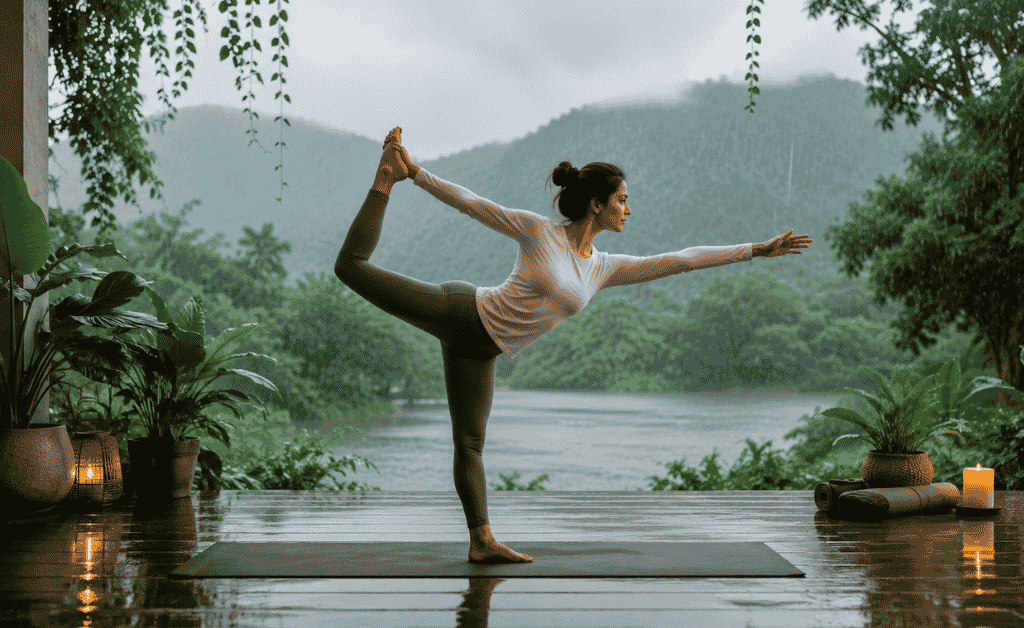
There is something magical about monsoon season. The smell of wet earth, the green hills, and the sound of rain on leaves calm the mind in a way few other things can. But along with all that beauty comes a real dip in energy. Falling air pressure during rainy weather lowers the oxygen content in the air, which makes your brain feel sluggish and your body feel heavier than usual. That low feeling on rainy days is not just in your head, it is your body responding to real changes in the environment.
Monsoon also tests your immune system. The combination of dampness and rising humidity makes the body more vulnerable to flu, colds, and stomach upsets. A short, consistent yoga practice can help fight both the sluggishness and the seasonal illnesses that tend to show up this time of year.
Why Yoga Helps During Monsoon
Regular yoga practice supports better circulation and helps the lymphatic system drain more effectively, especially when paired with breathing exercises. This plays an important role in keeping the immune system strong and helping your body resist common monsoon infections.
Yoga also does a lot for your mood. When sunlight is limited and energy feels low, a consistent practice encourages the release of feel-good hormones, calms the nervous system, and brings a sense of balance. It eases the stiffness that builds up in joints during humid weather and gives a much-needed energy boost on days when getting out of bed feels harder than usual. Twenty to thirty minutes a day, done with focus and consistency, is enough to make a real difference over time.
Poses That Support Immunity
Cobra Pose (Bhujangasana) opens the chest and gently stimulates the thymus gland, which plays a direct role in your immune system by helping release T cells.
Boat Pose (Naukasana) also stimulates the thymus gland and strengthens the abdominal organs, including the liver. It supports better digestion, which tends to weaken during humid weather.
Bridge Pose (Setu Bandhasana) improves immunity by stimulating the thymus gland while opening the chest and lifting your mood.
Downward Facing Dog (Adho Mukha Svanasana) is an inverted pose that helps open up blocked sinuses, especially helpful during monsoon congestion.
Cat-Cow Stretch (Marjaryasana-Bitilasana) is a gentle way to begin any monsoon practice. This flowing movement wakes up the spine, connects you with your breath, and gives a light internal massage that lifts your energy.
Breathing Practices Worth Adding
Kapal Bhati Pranayama clears the respiratory tract and helps build resistance against colds and flu common during monsoon.
Nadi Shodhan Pranayama (Alternate Nostril Breathing) helps open a blocked nose and strengthens resistance in the sinuses, useful during a season known for congestion.
Mood-Lifting Poses for Sluggish Days
On days when motivation feels especially low, a few extra poses can help shake off that heavy, slow feeling.
Head to Knee Pose (Janu Sirsasana) is a simple seated stretch that gets blood flowing again and builds core strength after a light warm up.
Upward Facing Dog (Urdhva Mukha Svanasana) engages your core, shoulders, and back while improving circulation between organs, helping you feel more awake.
Cow Face Pose (Gomukhasana) wakes up the arms, calves, and back muscles, which often feel stiff during damp weather.
Warrior Pose (Virabhadrasana), practiced through its variations, works almost every major muscle group and is approachable even for beginners.
Half Lord of the Fishes Pose (Ardha Matsyendrasana) gives the spine a lateral stretch, which is energising and especially helpful on grey, low-energy days.
A Few Lifestyle Tips for Monsoon Season
Drink plenty of water, ideally at room temperature or slightly warm on heavier rainy days. Wash vegetables thoroughly before eating, and include bitter foods like bitter gourd and fenugreek in your meals, since these help balance the body during this season. Amla, or Indian gooseberry, is especially useful as it supports the liver and aids digestion.
Try to avoid street food and deep fried snacks where possible, since these can be harder to digest and increase the risk of stomach infections. If you do indulge, keep portions small and follow up with a glass of warm water. Eating at regular intervals and avoiding excessive caffeine also helps keep digestion steady through the season.
Making Monsoon Work in Your Favour
The rainy season does not have to mean low energy and a weakened immune system. A short, regular yoga practice paired with mindful eating habits can help your body adjust to the seasonal shift instead of struggling against it. Roll out your mat, breathe deeply, and let your practice become the bright spot in your monsoon routine.
Sources and References
- Art of Living. Try This Simple Sequence of Monsoon Yoga for Immunity. https://www.artofliving.org/in-en/yoga/yoga-sequences-for/monsoon-yoga-for-immunity
- The Yoga Institute. Yoga Care During Monsoon. https://theyogainstitute.org/yoga-care-during-monsoon
- Yoga. Monsoon Yoga Routine: Boost Immunity and Beat the Rainy Day Blues. https://yamayoga.in/blogs/blog/monsoon-yoga-routine-boost-immunity-and-beat-the-rainy-day-blues
- Kosha Yoga Co. Monsoons Making You Lazy? 5 Easy Asanas To Lift Your Mood. https://koshayoga.co/blogs/yoga-journal/yoga-in-the-monsoons
Disclaimer
The information in this blog is for general educational and awareness purposes only. It is not intended to replace professional medical or health advice. The yoga poses and breathing techniques described here are general guidance and may not suit everyone. If you have any existing injuries, health conditions, or physical limitations, please consult a qualified healthcare professional or certified yoga instructor before starting or changing your practice. We do not guarantee specific results from practicing the poses mentioned in this blog, as individual experiences may vary.
This blog post was written with the assistance of AI. The information is based on publicly available yoga and wellness resources and is intended for general awareness only. We recommend readers verify information independently and consult a qualified practitioner for personal guidance.