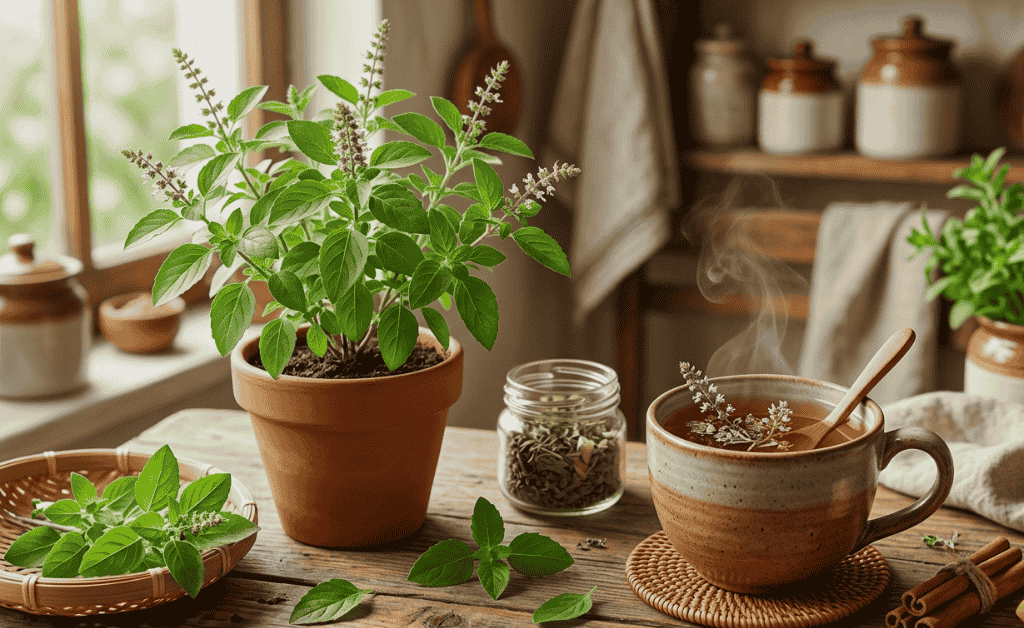
If you've grown up in an Indian household, you've probably seen a Tulsi plant sitting in the courtyard, getting watered every morning like a family member. There's a reason for that. Tulsi has been part of Indian life for thousands of years, not just as a spiritual symbol, but as a real, working herb that people have used to stay healthy.
Today, even people outside India are starting to pay attention to it. And honestly, they should. Let's talk about what Tulsi actually is, what it can do for your body, and how you can start using it.
What Is Tulsi, exactly?
Tulsi goes by the scientific name Ocimum sanctum or Ocimum tenuiflorum. You might also hear it called Holy Basil. In Ayurveda, the ancient Indian system of health and healing, Tulsi is referred to as the "Queen of Herbs." That's a big title, but Tulsi earns it.
Ancient texts like the Charaka Samhita and Sushruta Samhita mention Tulsi as a powerful remedy for everything from coughs and colds to stress and digestive trouble. These weren't just old-fashioned guesses. Modern research is now catching up and confirming a lot of what Ayurveda said centuries ago.
Not All Tulsi Is the Same
Before we get into benefits, it helps to know that Tulsi comes in a few different types. Each one has a slightly different character.
Rama Tulsi has bright green leaves and a mild taste. It's great for skin and works well as a daily health tonic. If you're new to Tulsi, this one is a gentle starting point.
Krishna Tulsi has dark purple leaves and a stronger, more intense flavour. It has a higher concentration of a compound called Eugenol, which gives it extra power for respiratory problems and immune support. If you're dealing with a stubborn cough or congestion, Krishna Tulsi is often the one people reach for.
Vana Tulsi is more aromatic and grows wild in forests. It's less common in homes but is known for being rich in antioxidants and for supporting energy and mental focus.
What Makes Tulsi Work
You don't need to memorise a list of chemicals to understand Tulsi. But knowing a few key things helps explain why it works so well.
Tulsi leaves contain Eugenol, a natural compound also found in cloves, that has warming and germ-fighting qualities. It also contains Rosmarinic Acid, a strong antioxidant that helps protect your body's cells from damage. Add to that Ursolic Acid, which supports the immune system and helps manage stress, plus vitamins A and C, calcium, iron, and zinc, and you start to see why this small plant punches well above its weight.
What Tulsi Can Do for Your Health
It Builds Up Your Immunity
Tulsi helps your immune system work better by increasing the activity of white blood cells, which are your body's first defence against infections. Its antioxidants fight off the kind of internal damage that makes you more likely to get sick. Whether you're drinking it as tea or chewing a few leaves, regular use gives your body a steady boost.
It Helps with Coughs, Colds, and Breathing
This is one of Tulsi's most well-known uses. It helps clear blocked airways, reduces inflammation in the throat and lungs, and makes it easier to breathe. In Ayurveda, it balances what are called Kapha and Vata energies, which relate to mucus, congestion, and cold-related symptoms. A simple tea made with Tulsi leaves, a pinch of black pepper, and a bit of cinnamon works really well when you're feeling stuffed up.
It Calms Your Nervous System
Tulsi is what doctors and herbalists call an adaptogen. That means it helps your body handle stress better. When you're under pressure, your body releases a hormone called cortisol. Too much of it over time causes a lot of problems. Tulsi helps bring that response back to a more normal level. Many people find that a cup of Tulsi tea in the evening helps them feel calmer and think more clearly.
It Supports Your Liver and Detoxifies Your Blood
Your liver filters out waste and toxins from your body every single day. Tulsi supports this process by helping your liver work more efficiently. It also purifies your blood, which is part of why it's been traditionally connected to clear skin and better energy.
It Helps Manage Blood Sugar
Research suggests that Tulsi supports better glucose metabolism, which means it helps your body process sugar more effectively. This makes it a useful addition for people who want to manage their blood sugar levels. That said, if you have diabetes or are on medication, always check with your doctor before adding Tulsi to your routine in larger amounts.
It Helps Your Gut Feel Better
If you regularly deal with bloating, gas, or that heavy feeling after meals, Tulsi can help. It stimulates digestion, helps break down food more effectively, and reduces discomfort. It also creates a better environment for healthy gut bacteria to thrive.
It Does Good Things for Your Skin
Tulsi's antibacterial and anti-inflammatory properties make it useful for acne, minor skin irritation, and pigmentation. You can make a simple face mask by grinding fresh leaves with a little water into a paste, applying it to your face, and washing it off after 10 to 15 minutes. The blood-purifying effect of Tulsi also works from the inside to give you clearer skin over time.
It Keeps Your Mouth Healthy
Chewing one or two Tulsi leaves helps kill the bacteria that cause bad breath and gum problems. It's not a replacement for brushing, but it's a good natural add-on. Ayurvedic toothpastes often include Tulsi as an ingredient for exactly this reason.
It Strengthens Your Hair and Scalp
Tulsi improves blood flow to the scalp and has antifungal properties that fight dandruff. You can apply a paste of Tulsi leaves directly to your scalp or rinse your hair with water that has Tulsi steeped in it. Over time, this can lead to healthier roots and reduced hair fall.
How to Use Tulsi Every Day
You don't need anything fancy. Here are a few simple ways to bring Tulsi into your daily life:
Chew fresh leaves. Wash 1 to 5 leaves and chew them in the morning. It's the most direct way to get the benefits. Just don't wash them down with milk, as Ayurveda considers that combination unhelpful.
Make Tulsi tea. Steep 5 to 6 fresh leaves (or 1 teaspoon of dried leaves) in hot water for about 5 to 10 minutes. Add ginger or lemon if you like. Drink it any time of day.
Use Tulsi powder. Mix a quarter to half a teaspoon of dried Tulsi powder with warm water or honey. Easy and quick.
Try Tulsi Ark. This is a concentrated liquid extract made by distilling fresh Tulsi leaves. It's very potent, so you only use 2 to 10 drops mixed in water. It's great for respiratory problems and stress, but start with a small amount if you're new to it.
Apply it to your skin or scalp. Grind fresh leaves into a paste and use it as a face mask or scalp treatment. Simple, low-cost, and effective.
A Few Things to Keep in Mind
Tulsi is safe for most people when used in normal amounts. But here are a few situations where you should be careful:
If you tend to have acidity, heartburn, or skin rashes that feel hot, use Tulsi in smaller amounts. Its warming nature can make those issues worse for some people.
If you're pregnant, a cup of Tulsi tea is generally considered fine, but avoid concentrated supplements or extracts unless a healthcare provider says it's okay.
If you take blood-thinning medication, talk to your doctor first. Tulsi has a mild blood-thinning effect that can interact with those medicines.
If you have a surgery coming up, it's usually recommended to stop taking Tulsi supplements about two weeks before.
Why It's Worth Adding to Your Routine
Tulsi isn't a cure for everything. But for a small, easy-to-grow plant, it covers a lot of ground. It supports your immune system, helps you breathe better, calms your mind, aids digestion, and looks after your skin and hair. And most of the time, all it takes is a daily cup of tea.
You don't need to overhaul your life to benefit from it. Start small. Brew a cup tonight. See how you feel after a week. Sometimes the most useful things are the ones that have been around the longest.
Sources:
https://maharishiayurvedaindia.com/blogs/wellness-need/tulsi-plant-benefits-uses-types-and-more
https://ayurved.dpu.edu.in/blogs/benefits-of-tulsi-ayurveda
Disclaimer
This blog post is for informational purposes only and is not a substitute for professional medical advice. Always consult your doctor before adding Tulsi to your routine, especially if you are pregnant, on medication, or managing a health condition. Results may vary from person to person.