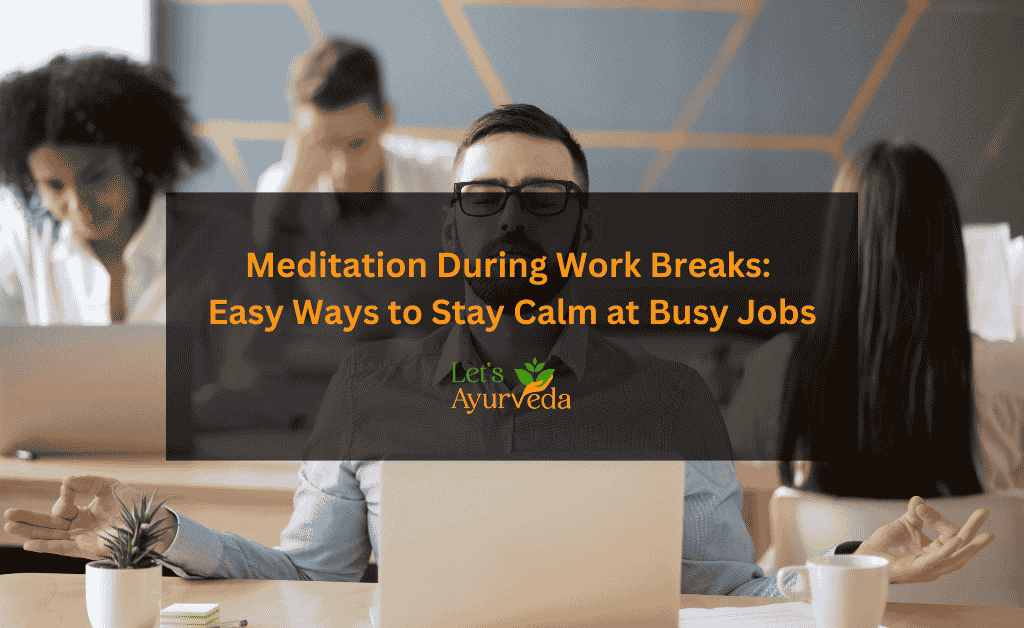
High-pressure jobs can make even the calmest person feel stressed. Tight deadlines, long meetings, constant messages, and heavy responsibilities can drain your energy fast. Many of us feel tired, restless, or upset during the workday, even before lunch. This is common among people in all kinds of jobs, from office work to healthcare and customer service.
The good news is that you do not need long holidays or special tools to feel calm again. You can use meditation during work breaks to relax your mind and body. Even a few minutes can help you feel more focused, balanced, and in control.
In this blog, we will explore how meditation during work breaks works, why it helps in high-pressure jobs, and how you can start easily.
What Is Meditation During Work Breaks?
Meditation during work breaks means taking short moments during your day to slow down your thoughts and calm your breathing. You do not need to sit on the floor or close your eyes for a long time. You can practice it at your desk, in a quiet corner, or even while sitting in your car.
This type of meditation focuses on simple actions like breathing slowly, noticing your body, or paying attention to the present moment. When you do this, your mind gets a break from stress, just like your body needs rest after hard work.
Why High-Pressure Jobs Increase Stress
High-pressure jobs often demand quick decisions and constant attention. You may feel like you have no time to pause. Over time, this can cause problems like headaches, anger, low focus, and poor sleep.
When stress builds up, your body stays in alert mode. Your heart beats faster, your muscles tighten, and your thoughts race. Meditation helps by telling your body that it is safe to relax, even if work is busy.
How Meditation Helps You Stay Calm at Work
Meditation during work breaks can change how you handle pressure. When you practice it regularly, you may notice positive changes.
It helps slow your breathing, which sends calm signals to your brain. It improves focus, so you can work without feeling overwhelmed. It also helps you respond better to stress instead of reacting quickly with anger or fear.
Over time, meditation can improve your mood and help you feel more patient with coworkers and tasks.
Simple Meditation Techniques You Can Do at Work
You do not need special training to meditate. Here are easy techniques you can use during short work breaks.
1. Deep Breathing Meditation
Sit comfortably and place both feet on the floor. Take a slow breath in through your nose and count to four. Hold it for two seconds. Then breathe out slowly through your mouth and count to six. Repeat this for two to five minutes. This simple practice can calm your mind quickly.
2. Body Awareness Meditation
Close your eyes if you feel comfortable. Bring your attention to your body. Notice your shoulders, neck, and jaw. If they feel tight, gently relax them. This helps release stress you may not even realize you are holding.
3. One-Minute Focus Meditation
Set a timer for one minute. During this time, focus only on your breathing. If your mind wanders, gently bring it back to your breath. Even one minute can help reset your mind during a busy day.
4. Walking Meditation During Breaks
If you take short walks during breaks, focus on how your feet touch the ground. Notice your steps and your breathing. This helps clear your mind while you move your body.
When Is the Best Time to Meditate at Work?
You can meditate anytime you feel stressed. Many people find it helpful to meditate in the morning before starting work. Others prefer doing it during lunch breaks or after stressful meetings.
The best time is when you can pause without pressure. Even two to five minutes can make a difference.
How to Build a Daily Meditation Habit at Work
Start small so meditation feels easy and natural. Choose one short break each day for meditation. You can set a reminder on your phone or link meditation to something you already do, like drinking tea or coffee.
Do not worry about doing it perfectly. The goal is to slow down and be present, not to stop thoughts completely.
Final Thoughts: Stay Calm, Even in Busy Jobs
High-pressure jobs do not have to control your mood or peace of mind. When you practice meditation during work breaks, you give yourself a simple and powerful tool to stay calm and focused.
You deserve moments of peace, even on busy days. With regular practice, meditation can help you handle pressure with more ease and confidence. Start today with just a few minutes, and let calm become part of your work life.