Summer brings longer days, more energy, and a natural push to get outside and stay active. But it also brings heat, and that changes things, including your yoga practice. If you have ever felt drained, overheated, or restless on your mat during summer months, that is your body asking you to slow down and shift gears.
In yoga, every pose is either heating, cooling, or neutral. Summer is the ideal time to lean into the cooling ones. Forward folds, gentle inversions, and seated poses all help bring the body's internal temperature down. They also support digestion, improve circulation, and help you feel calm when the heat gets to be too much.
Here are some of the best yoga poses to practice in summer, along with what to be careful about when the temperature rises.
What to Avoid on Hot Days
Before getting into the poses, it helps to know what tends to overheat the body during a yoga practice.
Deep backbends, arm balances, and fast-paced flow sequences all build internal heat quickly. If you are practicing in warm conditions, these can leave you feeling drained rather than energised. Fast transitions between poses speed up the breath and push the body into a more aerobic state, which adds to the heat buildup.
Breathing also matters. Rapid inhalations tend to heat the body, while longer exhalations cool it down. On hot days, focus on making your exhale slightly longer than your inhale. Also try to keep your face and jaw relaxed throughout your practice. Tension in the face carries into the shoulders, hips, and knees and makes the whole body work harder than it needs to.
The key on a hot day is to move with steadiness and control rather than speed.
Poses That Cool the Body
Downward Facing Dog (Adho Mukha Svanasana)
This pose works as a semi-inversion, meaning your heart is above your head. That position helps the heart rest and naturally brings body temperature down. It also stretches the full back of your body, builds strength in the arms and legs, and helps recover the body from fatigue. Hold it for longer than you normally would, focus on slow exhalations, and rest in Child's Pose between rounds if needed.
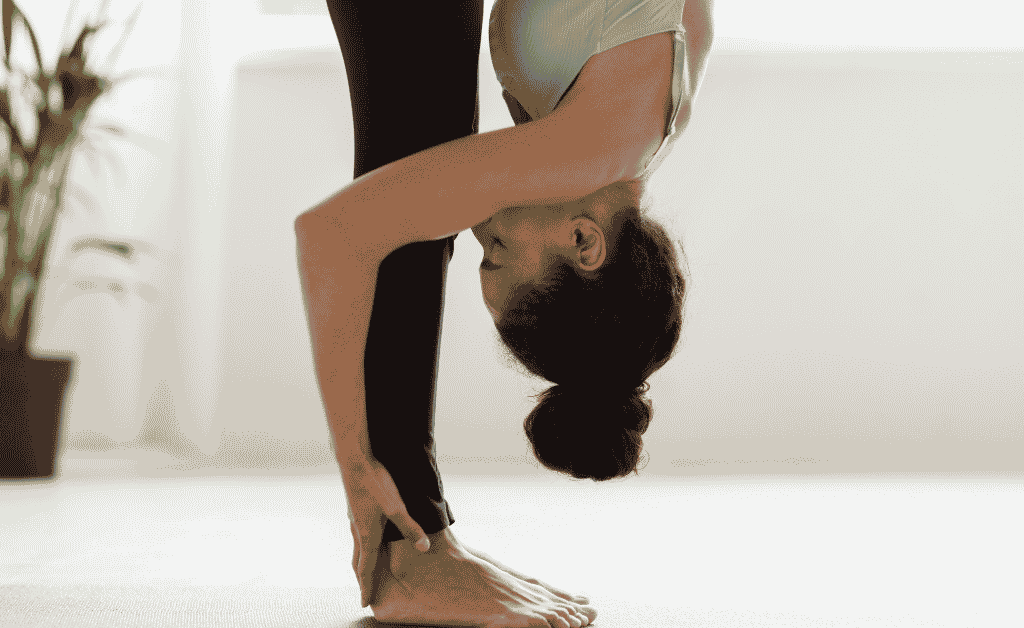
Standing Forward Fold (Uttanasana)
In this pose, the heart sits above the brain, which helps cool the body down from within. It is another gentle semi-inversion that pairs well with Downward Facing Dog. Keep the back of your neck soft and let your head hang freely. If your hamstrings feel tight, a half forward fold works just as well.
Wide-Legged Standing Forward Fold (Prasarita Padottanasana)
This pose continues the theme of bringing blood back toward the heart with minimal effort. Step your feet wide apart, hinge forward from your hips, and let your upper body hang. Keep your spine long as you fold and anchor your feet firmly into the ground. Breathe steadily and let gravity do the work.
Extended Side Angle (Utthita Parsvakonasana)
This is a standing pose that opens the ribs, stretches the sides of the body, and strengthens the legs. In summer, it helps calm digestion and restore a steady rhythm to the breath. Step your feet wide, turn one foot out to 90 degrees, bend that knee, and lower your arm toward the floor or a block beside your front foot. Reach your other arm over your head to create a long line from your back foot to your fingertips. Hold for 30 to 60 seconds and then switch sides.
Seated Wide-Angle Forward Fold (Upavistha Konasana)
Summer heat naturally makes the body more flexible and open, which makes this a great time to work on this seated pose. Sit on the floor with your legs stretched wide apart. Make sure there is no pain or discomfort in your hip joints. Inhale and sit tall, then exhale and slowly walk your hands forward on the floor between your legs. Keep your back long rather than rounded. Go only as far as feels comfortable and hold the position with steady, relaxed breathing. This pose helps open the hips gradually and is cooling because it is done close to the ground and at a slow pace.
Legs Up the Wall (Viparita Karani)
This is one of the most restorative poses you can do in summer. Sit close to a wall, swing your legs up so they rest flat against it, and let your back lie on the floor. Open your arms out to the sides and let your whole body relax completely. The inversion of the legs, with your hips slightly higher than your heart, encourages circulation and gives the body a deep sense of rest and release. Hold for several minutes. You can place a folded blanket under your hips for support if needed.
Knees to Chest (Apanasana)
This is a simple, gentle pose that works well for all levels. Lie on your back with your legs bent. Draw both knees toward your chest and hold them there with your hands. As you inhale, let your knees move slightly away from your chest. As you exhale, draw them back in. This gentle rocking massages the lower back and abdominal organs and supports digestion, which can be affected during the summer months. Stay for several minutes with slow, relaxed breathing.
Shoulder Stand (Sarvangasana)
If you want an inversion that cools rather than heats the body, this is the one to choose. Headstands and handstands tend to build heat, but shoulder stand has a calming, cooling effect. Lie on your back, press your arms into the floor, and lift your legs and hips toward the ceiling while supporting your back with your hands. Keep your shoulder blades pressing into the floor and avoid putting pressure on your neck. Hold for one to three breaths to start, and build up gradually with practice.
Fish Pose (Matsyasana)
This pose works well as a counter pose after shoulder stand. Lie on your back, slide your hands under your hips, and lift your chest toward the ceiling while letting your head rest back on the floor. It opens the chest and upper back and helps counterbalance the compression from shoulder stand. Stay for one to five slow breaths.
A Breathing Technique Worth Adding
Sitali Pranayama, also known as the cooling breath, is one of the best tools for managing summer heat both on and off the mat. Sit comfortably with your back straight. Stick out your tongue and curl the sides of it upward to form a small tube. Inhale slowly through that tube. Then close your mouth and exhale through your nose. Repeat this for around 12 breaths. This technique helps lower body temperature, supports muscle relaxation, and encourages a calmer state of mind.
A Few Tips for Summer Practice
Practice in the early morning when the air is cooler and the body feels fresh. This is the best time for yoga in summer and it sets a calm tone for the rest of the day.
Move more slowly than you normally would and focus on the quality of your breath rather than how many poses you get through.
Forward folds and seated poses are your best friends in summer because they require less energy than standing sequences and naturally encourage the body to turn inward and cool down.
Sources and References
- Yoga Journal. 12 Yoga Poses to Energize Your Body For Summer. https://www.yogajournal.com/practice/yoga-sequences/yoga-poses-to-energize-body-for-summer/
- Sincronia Yoga. 5 Postures to Practice Yoga in Summer. https://sincroniayoga.com/en/yoga-in-summer/
- Aham Yoga. Top 5 Yoga Poses To Stay Cool This Summer. https://blog.ahamyoga.com/2017/07/yogaposestostaycool/
Disclaimer
The information in this blog is for general educational and awareness purposes only. It is not intended to replace professional medical or health advice. The yoga poses and techniques described here are general guidance and may not suit everyone. If you have any existing injuries, health conditions, or physical limitations, please consult a qualified healthcare professional or certified yoga instructor before starting or changing your practice. We do not guarantee specific results from practicing the poses mentioned in this blog, as individual experiences may vary. Always listen to your body and stop if you feel any pain or discomfort.
This blog post was written with the assistance of AI. The information is based on publicly available yoga and wellness resources and is intended for general awareness only. We recommend readers verify information independently and consult a qualified practitioner for personal guidance.