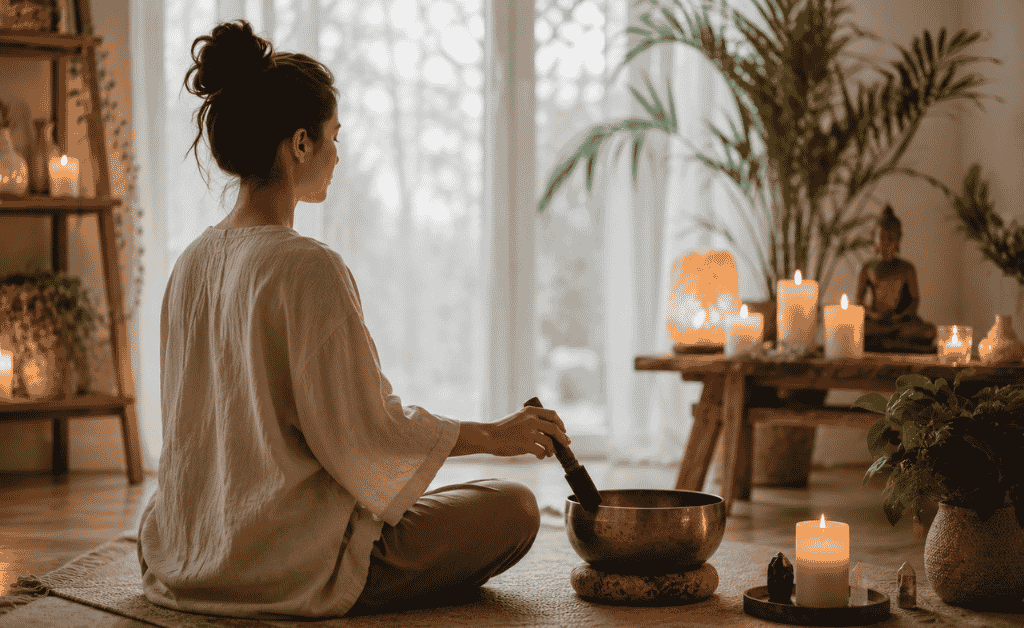
If you have ever seen someone run a wooden stick around the edge of a metal bowl and watched it produce a steady, ringing sound, you have seen a singing bowl in action. It looks simple. But there is actually a lot going on, and more and more people are using these bowls to help them slow down, reduce stress, and get into a calmer state of mind.
Here is everything you need to know about singing bowls and how to use one for meditation.
What Is a Singing Bowl?
A singing bowl is a type of standing bell, shaped like a bowl rather than hanging from above. You play it by either striking it with a mallet or slowly circling the mallet around the rim to create a continuous, humming sound. Most bowls are made from a mix of metals like copper and tin, and traditional ones were often handmade by craftsmen who treated the process as a spiritual practice.
These bowls have been used for centuries, especially in Buddhist and Tibetan traditions. Monks used them during spiritual ceremonies, and they were often seen as sacred objects. Today, you can find them all over the world, used in sound therapy sessions, yoga studios, and personal meditation practices.
Why Do People Use Them for Meditation?
One of the biggest reasons people struggle with meditation is that sitting still and quieting your mind is genuinely hard. Your thoughts wander, you feel restless, and it can take years of practice to feel like you are doing it right.
Singing bowls offer a different entry point. Instead of forcing your mind to go quiet, you give it something to focus on. The sound of the bowl draws your attention into the present moment. You listen to the tone, feel the vibrations, and your brain naturally starts to settle.
Research backs this up. A study published in a peer-reviewed journal looked at 62 adults who took part in a singing bowl sound meditation session. Before and after the session, participants answered questions about how they were feeling. After the meditation, people reported feeling less tension, less anger, less fatigue, and a better overall mood.
Those who had never tried this kind of meditation before saw some of the biggest improvements, especially in their levels of stress and anxiety. Participants between the ages of 40 and 59 also reported a noticeable reduction in physical pain.
Researchers believe the sounds from singing bowls may help the brain move into a more relaxed state by generating certain brain wave patterns connected to deep rest and calm.
How to Play a Singing Bowl
You do not need any musical experience to use a singing bowl. There are two main ways to play one. Striking the bowl is the simpler method. You hold the bowl in your non-dominant hand and lightly tap the side of the bowl with the padded end of the mallet. This creates a clear, bell-like sound that slowly fades. This is a good starting point if you are just getting used to the bowl.
Rimming the bowl takes a little more practice but produces a rich, continuous tone that many people find deeply relaxing. Start by giving the bowl a light strike to warm it up. Then press the mallet gently against the outside rim of the bowl and begin moving it in slow, steady circles. Keep the mallet upright and maintain light pressure as you go. After a few rotations, you will start to hear a clear, sustained sound build up. This is the "singing" that gives the bowl its name.
You can also try adding a small amount of water to the bowl before playing it. The water changes the sound and creates an interesting effect as the vibrations move through the liquid.
When you first get a new mallet, it helps to play the bowl for a few minutes before your first real session. This lets the mallet develop tiny grooves that help it grip the rim better, which makes producing a clean sound easier over time.
How to Use a Singing Bowl in Your Meditation Practice
You do not need a long session to feel the benefits. Even a few minutes with a singing bowl can help shift your mental state.
Find a quiet spot where you will not be interrupted. Sit comfortably and place the bowl in your open palm. Take a few slow, deep breaths before you begin. Then start playing the bowl using whichever method feels right to you.
As the sound fills the room, let your attention follow it. Try not to think about anything else. Just listen to the tone, notice how it changes, and feel any vibration in your hand or in your chest. If your mind wanders, the sound gives you something to come back to.
You can play the bowl actively throughout your session, or you can strike it once and simply sit with the sound as it fades. Both approaches work well depending on what you need that day.
Choosing Your First Singing Bowl
If you are buying your first bowl, do not overthink it. The most important thing is that the sound feels good to you. Some bowls produce a deep, low tone and others ring at a higher pitch. Neither is better than the other. It comes down to personal preference.
Traditional Tibetan singing bowls are made from a blend of metals and come in a wide range of sizes. Larger bowls tend to produce deeper sounds, while smaller ones ring higher. If possible, try a few before you buy so you can hear and feel the difference.
A Simple Tool With Real Benefits
Meditation does not have to feel complicated or require years of training. Singing bowls give you a simple, accessible way to slow down and be present. The sound does a lot of the work for you. You just have to listen.
Whether you use it for five minutes before bed or as part of a longer practice, a singing bowl can become one of the most useful things in your self-care routine.
References:
https://harithayogshala.com/blog/singing-bowl
https://www.shantibowl.com/blogs/blog/meditation-and-singing-bowls
https://pmc.ncbi.nlm.nih.gov/articles/PMC5871151/
Disclaimer: This blog post is for informational purposes only and does not serve as medical or mental health advice. The information shared here is based on general wellness practices and published research. If you are dealing with a medical condition, chronic pain, or a mental health concern, please consult a qualified healthcare professional before making changes to your wellness routine.