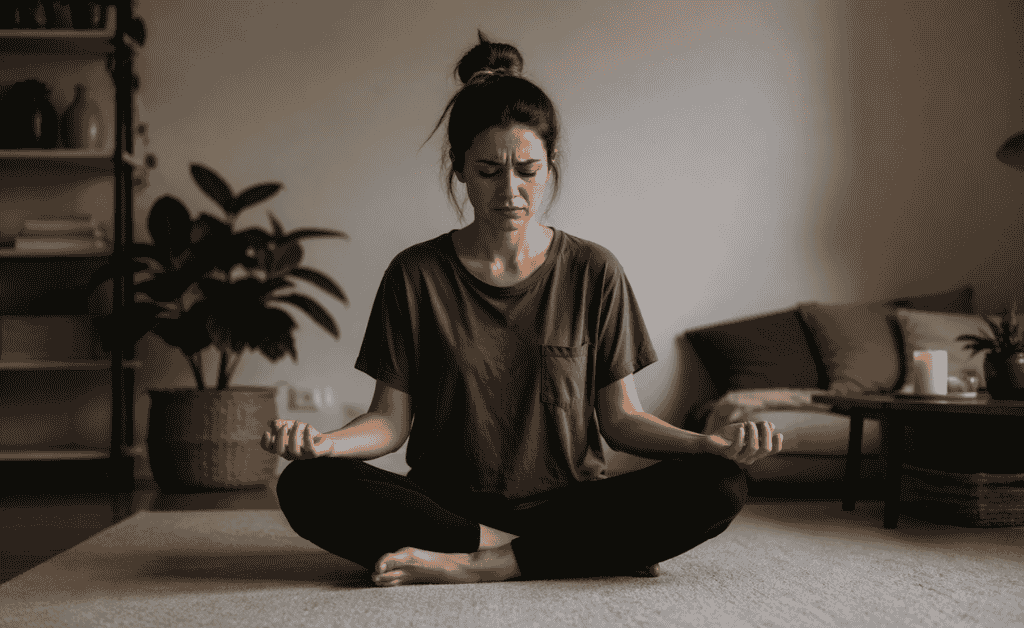
Everyone seems to be talking about meditation these days. Apps, YouTube videos, wellness influencers, your coworker who won't stop mentioning their morning routine. Meditation is everywhere. And yet, a lot of people try it, feel frustrated, and quietly give up.
If that sounds like you, here's the thing: it might not be your fault. There are some real, fixable reasons why meditation feels impossible for certain people. Let's go through them.
Some People Actually Shouldn't Try Traditional Meditation
Before we get into the common mistakes, it's worth knowing that traditional meditation, sitting quietly, focusing on your breath, and turning your attention inward, can actually make things worse for some people.
If you deal with intense anxiety, your mind already feels like a crowded, noisy place. Asking it to go even deeper inward can spike your worry and discomfort instead of calming it. The same goes for people dealing with persistent sadness. They often already spend too much time alone with their thoughts. Sitting silently with them even longer can push things in the wrong direction.
A painful past experience is another big one. When something difficult from your past gets triggered, your mind can feel scattered and hard to control. Trying to force quiet into that state can feel overwhelming, not peaceful.
The same is true for people going through a mental health crisis or active addiction. In these situations, traditional meditation just isn't the right tool.
If any of this sounds like your situation, please don't beat yourself up for not being able to meditate. Your brain is dealing with something hard, and that's not a personal failure.
Common Reasons Meditation Feels Impossible
Now, for people who don't fall into those categories above, here are some of the most common reasons meditation feels like it's not working.
Your mind won't stop racing
A lot of people think meditation means having zero thoughts. It doesn't. Meditation is not about emptying your mind. It's about watching your thoughts without getting pulled into them.
So, when you sit down and suddenly feel like your brain is going a hundred miles an hour, that's actually normal. You're just paying attention to something you usually ignore. The goal is to notice the thoughts and gently bring your focus back to your breath, a word you repeat, or whatever you're using as your anchor.
You keep falling asleep
This one actually has a silver lining. If you fall asleep while meditating, it means you're relaxing deeply, and that's kind of the point. But if you want to stay awake, try meditating in the middle of the day instead of right before bed or right after waking up. You can also try soft background sounds or set gentle reminders at intervals to keep yourself from drifting off.
You only tried it once or twice
The benefits of meditation build up over time. One session gives you a small boost, but if you don't keep going, that feeling fades fast. Try to meditate daily, even for just five to ten minutes. If you skip a day, that's fine. The key is doing it more often than not. Give it a full month before you decide it's not for you.
You expect it to be perfect
This one trips up a lot of beginners. You picture yourself sitting cross-legged, completely still, breathing perfectly, and feeling completely at peace. And when it's not like that, you feel like you're doing it wrong.
You don't need to sit in a specific pose. You can sit in a chair, lie on the floor, or even sit in your car during a lunch break. Your hands don't need to be in any special position. The "rules" of meditation are more like suggestions. Adapt them so they work for you, not the other way around.
You're not making time for it
Here's an honest one: if you say you can't find time to meditate, what you really mean is it's not a priority yet. That's okay, but it's worth being honest about. Even five minutes a day works. You can attach it to something you already do, like meditating right after brushing your teeth or before your morning coffee. Linking it to an existing habit makes it easier to stick with.
What If Traditional Meditation Just Isn't for You?
Some people genuinely find sitting in silence unbearable. And that's okay too, because meditation doesn't have to look like a person sitting still with their eyes closed.
Any activity that calms your mind, focuses your attention, and helps you feel more grounded can work the same way. Think about tasks that pull you out of your head and give you something specific to do with your hands or body.
Walking, hiking, swimming, gardening, painting, cooking, knitting, woodcarving, even coloring in an adult colouring book can all work. The key is that the activity absorbs you enough to quiet the mental noise, without requiring you to face it head-on.
One example from the research behind this post is a young man who survived a serious car accident. He tried traditional meditation many times and felt worse every single time. Then one day, while cleaning his garage, he found a piece of wood and started carving it with a pocket knife.
The more he focused on the wood, the calmer he felt. That simple activity became his meditation practice, and it helped him heal in a way that sitting silently never could.
The Takeaway
Meditation isn't one-size-fits-all. If it's not working for you, there's likely a specific reason, and most of those reasons are fixable. Lower your expectations, be consistent, and give yourself time. And if the traditional version truly doesn't suit you, explore other activities that bring you the same kind of calm focus.
Your version of meditation might look completely different from what you see online. That's perfectly fine. What matters is that it works for you.
References:
https://www.integral.global/learn/10-reasons-meditation-isnt-working-for-you
Disclaimer: This blog post is for general information purposes only and is not a substitute for professional medical or mental health advice. The content is meant to help you explore what works best for you. If you are dealing with a mental health condition, please consult a qualified healthcare professional before starting or changing any wellness practice.